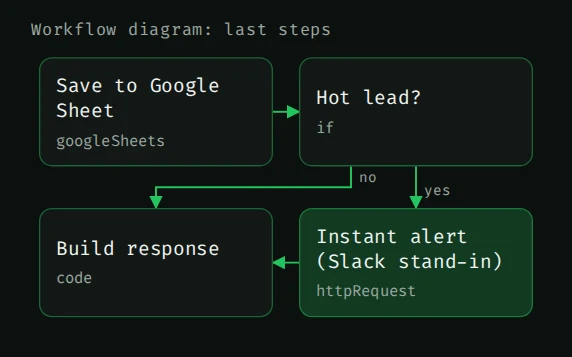
Contact form AI lead qualifier in n8n
A 10-node n8n workflow that reads each website contact form submission, labels it Hot, Warm or Not Relevant with a one-line reason, logs it to Google Sheets and alerts the team on Hot leads only.
A pipeline that turns real county building permits into ranked target projects and stage-aware three-touch email sequences, with every message linted and the export blocked until a real sender is confirmed.
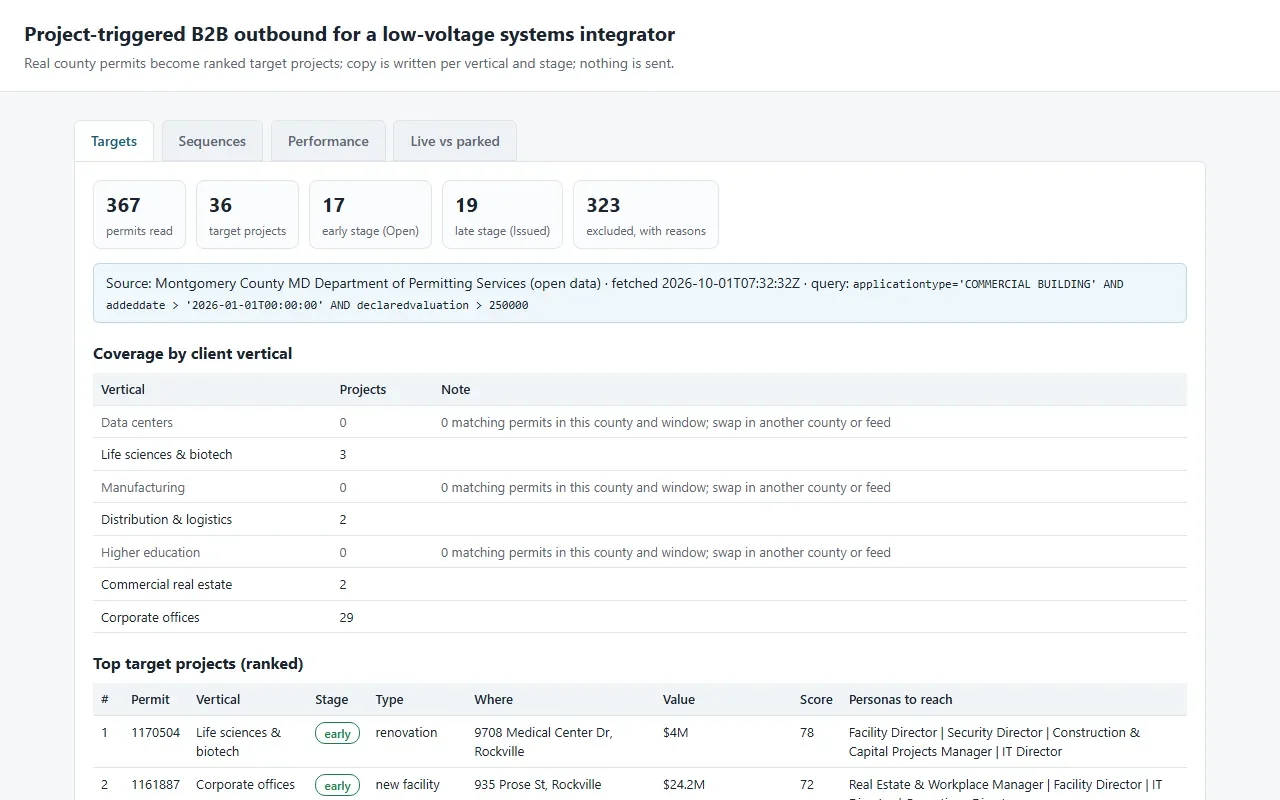
A low-voltage systems integrator wants to reach building owners early in a project, before the contractor has chosen vendors. The signal exists in public permit filings, but nobody has time to read them.
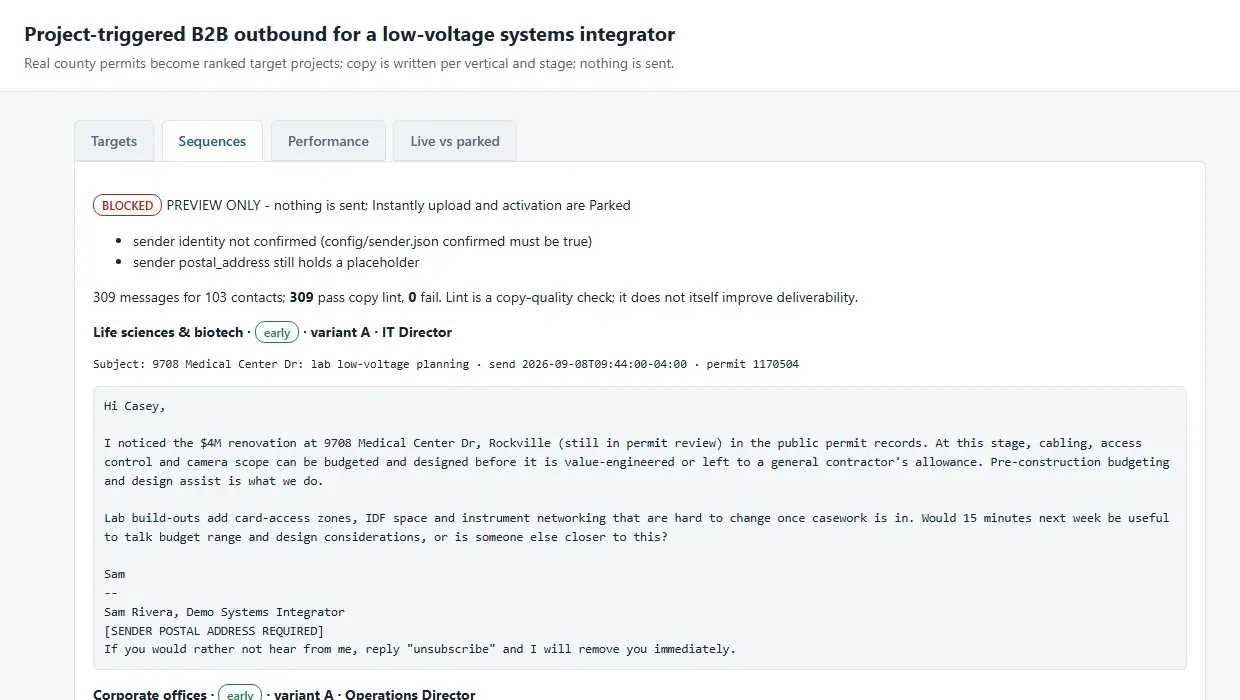
A Python pipeline that reads 367 public permits, ranks 36 target projects, validates a contact roster, writes 309 linted messages in three-touch sequences, and prepares a paused-draft export. It also includes a results report that refuses to call a winner on too little data.
The pipeline starts from a public source: the open building-permit feed published by Montgomery County, Maryland. It reads the permits, keeps the ones that describe a project a low-voltage integrator could sell into, and ranks them. Open permits count as early-stage, issued permits as late, and finaled permits are dropped.
For each target project it then builds outreach: three touches per industry and role, with A/B subject lines and a first line that changes with the project's stage. No AI writes the copy. Sequences come from a reviewed template library filled in with facts from the permit, and a lint step checks every message before it can be exported.
The last step produces a schedule on business days with a daily cap, in the shape of a paused draft for Instantly. The export stays blocked until a real sender identity and postal address are in place.
The numbers above come from an end-to-end run on a snapshot of the permit feed taken on 2026-10-01. The run's coverage check passed. The contact roster and the campaign results in the run are synthetic, and the dashboard labels them as stand-ins. They test the pipeline and say nothing about real reply rates.
Nothing is sent. Contacts and campaign results are synthetic stand-ins, the export is a preview that was never uploaded, and the build covers one county.
A 10-node n8n workflow that reads each website contact form submission, labels it Hot, Warm or Not Relevant with a one-line reason, logs it to Google Sheets and alerts the team on Hot leads only.
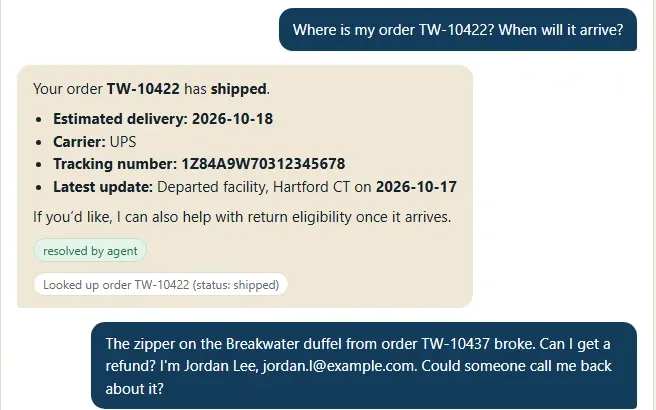
A customer support agent for a made-up online shop. It answers policy questions from 8 help-center documents with sources, looks up orders, checks refund eligibility, and hands real cases to a person.
Email the founder to arrange a free 45-minute video call. We map your workflow, tools and bottlenecks, and you get a prioritized roadmap.
Michael replies within two business days.